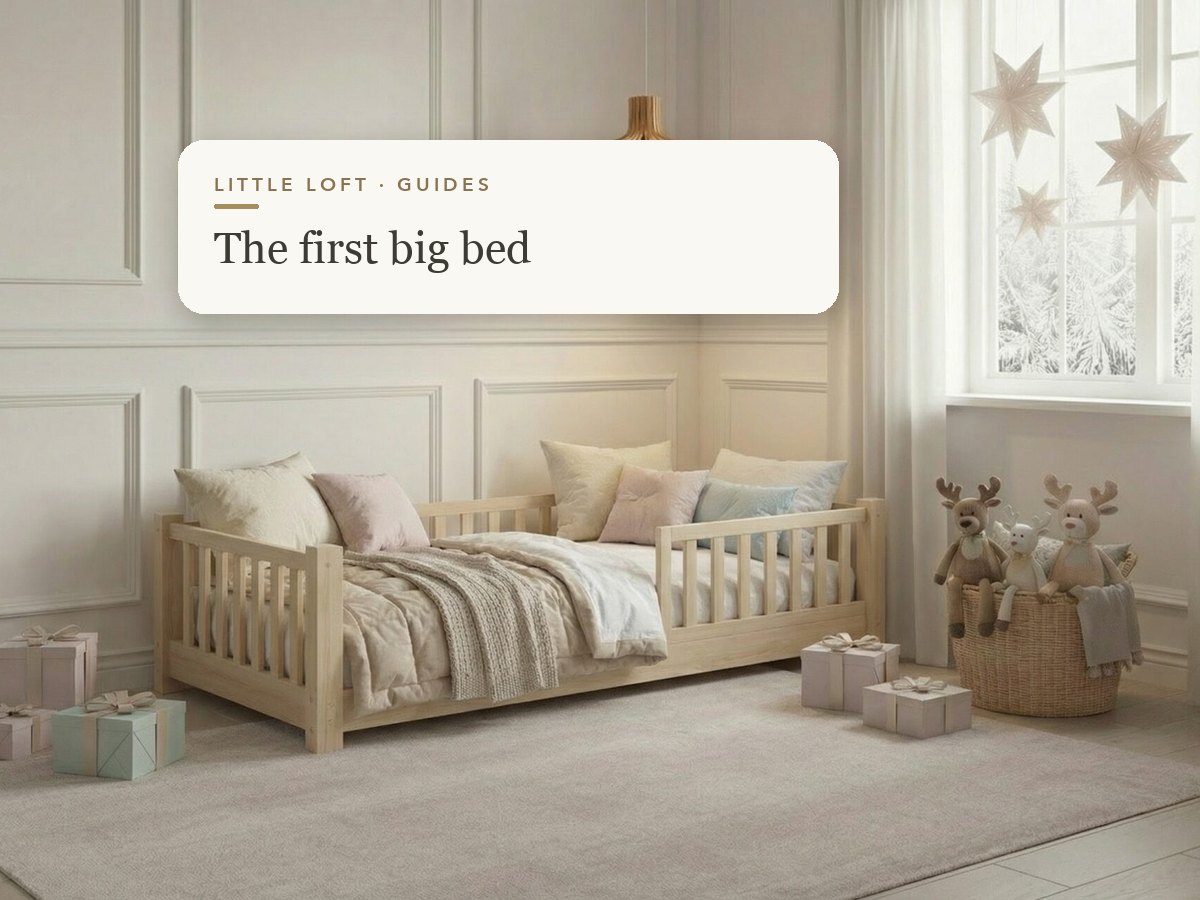
Bed for 2 Year Old: Which Bed Fits Now – and Grows With Them?
Bed for a 2 year old: on the floor or on legs, 70x140 or 90x200, which fall guard – plus a checklist for moving out of the cot.
For most two-year-olds, the best choice is a low bed directly on the floor with a fall guard – for example a mini house bed or a floor bed. Go straight for 90×200 (or 90×190), add a firm mattress and a fall guard you can remove later, and your bed for a 2 year old will last well into the school years. Loft beds and the top bunk wait until the sixth birthday.
In short
- No rush: plenty of children still sleep well in their cot at 2. Switch when your child climbs out or wants to get in and out alone.
- The safest option is a bed on the floor (0 cm high) with a fall guard and an open side for climbing in.
- 90×200 or 90×190 instead of a 70×140 junior bed – so you only buy once.
- A firm mattress that fits snugly; a pillow is not a must yet.
- Loft beds and top bunks only from 6 years (standard EN 747).
Is my child ready for a big bed at 2?
There is no fixed age for the move. Many children switch between their second and third birthday, some earlier, some later. What counts is what your child can already do and what they need. These signs point to a new bed:
- Your child climbs over the cot rail or tries to. A bed on the floor is then safer than a tall cot.
- They want to get in and out on their own – and call for you every morning until you lift them out.
- The 60×120 cot is getting tight: they bump into the bars or sleep across the mattress.
- A baby brother or sister is on the way and will need the cot.
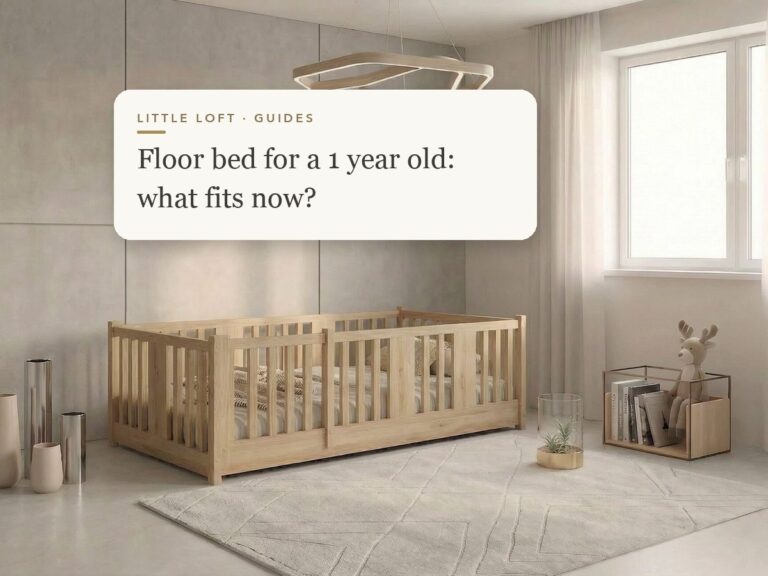
If none of this applies and your child sleeps well, you can take your time. If your child is younger, or you are torn between a cot and a floor bed, our guide floor bed for a 1 year old helps you decide.
Which bed suits a 2 year old best?
There are four types of bed you will come across for two-year-olds. They differ mainly in height and size – and therefore in how many years your child can sleep in them.
| Bed type | At age 2 | Why |
|---|---|---|
| Mini house bed / floor bed | very good | 0 cm high, gets in and out alone |
| Bed on legs (20 cm) | good, with fall guard | room for a drawer underneath |
| Junior bed 70×140 | possible | often too short by age four or five |
| Loft bed, top bunk | not yet | only from 6 years (EN 747) |
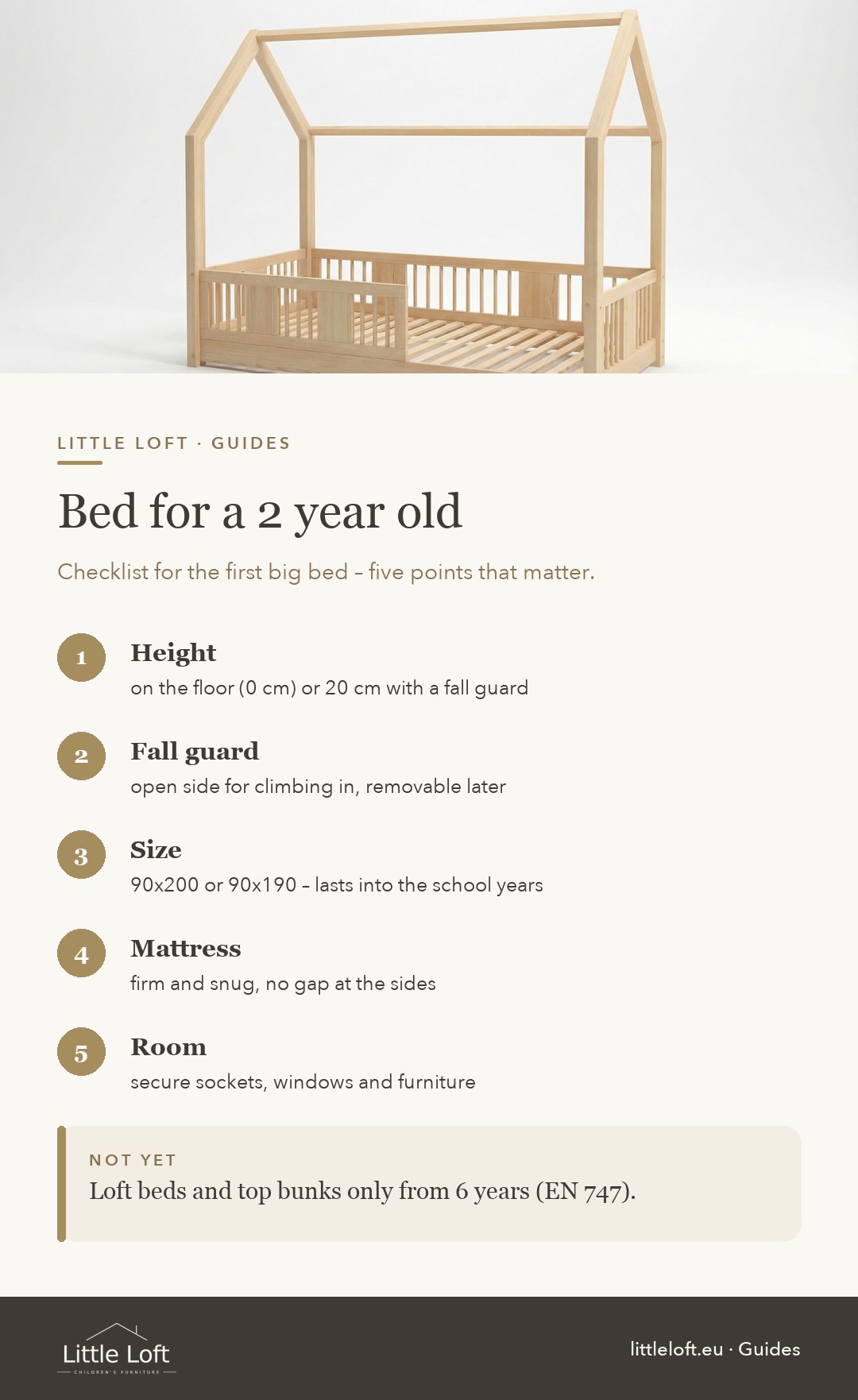
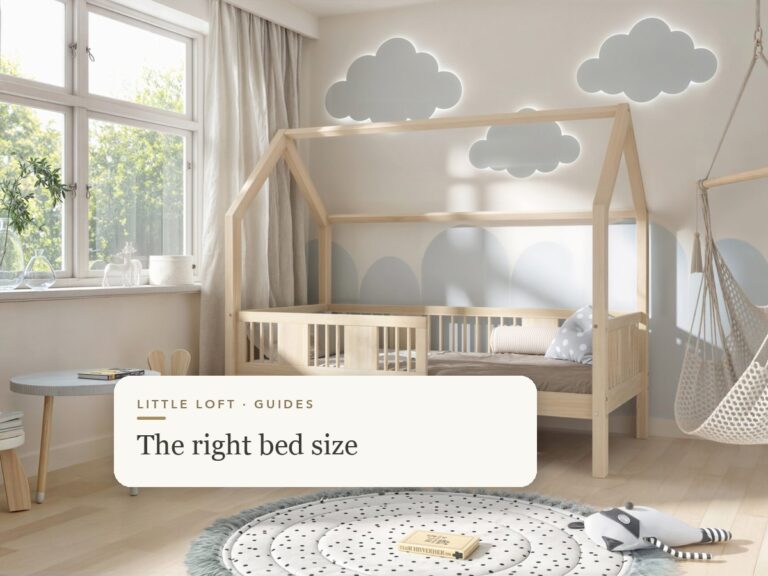
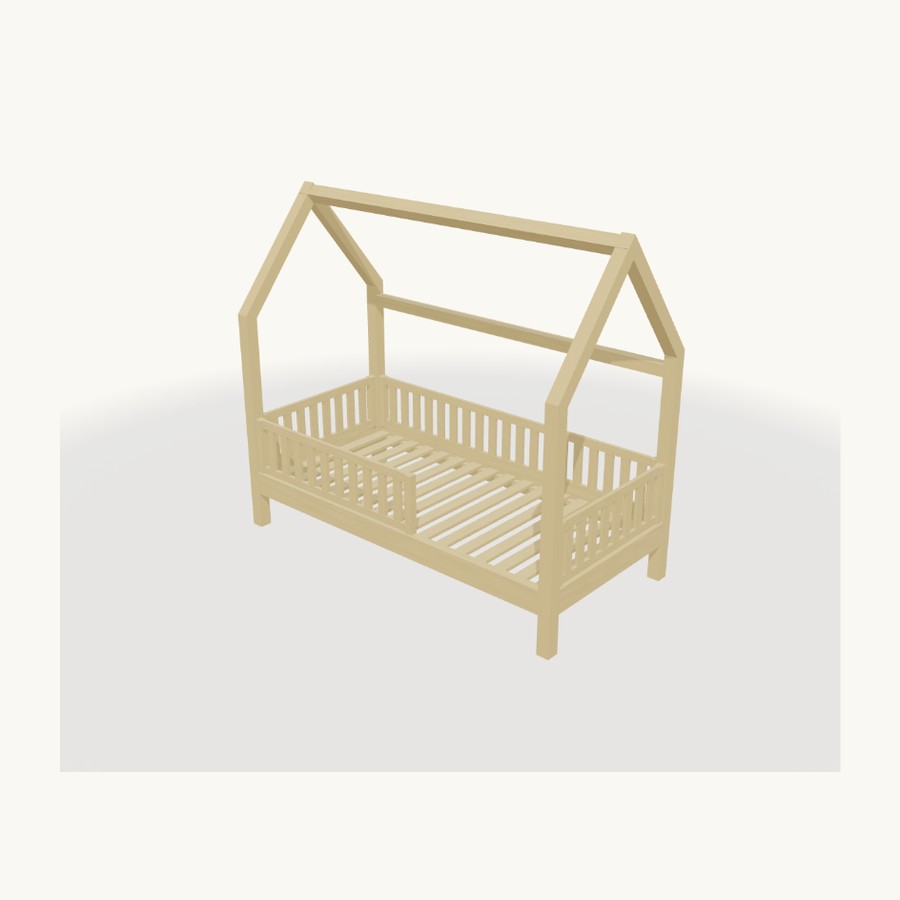
A mini house bed sits directly on the floor and has a wooden roof that turns the bed into a little den – which is why many children are happier to go to bed. Our LUMINA mini house bed and the LUNA mini children’s bed without a roof are designed as an ideal first bed for 2–5-year-olds – and afterwards they simply stay a normal children’s bed.
If you prefer something plainer, choose a floor bed without a roof such as the ANELLA mini children’s bed. You will find all models under house beds and first toddler beds. Every bed is made of pine wood and handmade in Europe.
Floor bed or bed on legs: which is safer for a 2 year old?
At two, many children still sleep restlessly, turn a lot and end up at the edge of the mattress. The lower the bed, the more harmless a tumble. That is why we recommend starting with the version directly on the floor (0 cm): your child climbs in alone, and if they do roll out, they land on the rug next to the bed.
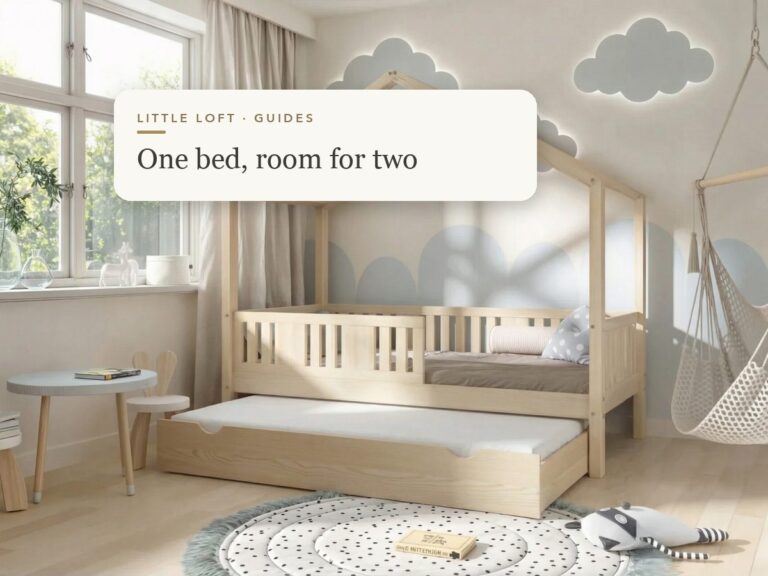
A bed on 20 cm legs also works for a two-year-old, as long as a fall guard is fitted. The advantage: there is room underneath for a toy drawer or a trundle bed for sleepovers (more on that in our guide trundle bed for kids).
Not sure? Start on the floor. For LUMINA mini, for example, a 20 cm leg set is available for sizes up to 120×200 – so the bed can be raised later when your child is bigger.
What size: 70×140, 90×190 or straight to 90×200?
A 70×140 junior bed looks like the right size for a small child, but it often becomes too short by age four or five. Then you buy a second bed, a second mattress and new bedding. A bigger bed is not “too big” for a toddler – with a fall guard, they feel just as snug in it.
- 90×200 is the standard size for mattresses and bedding across Europe, and the size families choose most often in our shop.
- 90×190 saves 10 cm in length and suits smaller rooms.
- 80×160 or 80×180 make sense if space is really tight.
- 140×200 is only available as a mini version on the floor – ideal if you regularly lie down with your child at bedtime. More in our guide floor bed 140×200 for kids.
Tip: mark the bed’s footprint on the floor with masking tape before you order. You will see straight away whether the door, the wardrobe and the play corner still have enough room.
Does a bed for a 2 year old need a fall guard?
Yes. Even on a floor bed, a fall guard stops your child rolling off the edge at night and waking up. Three things matter:
- An open side for climbing in: your child should be able to get in and out alone. A bed that is closed all round quickly becomes another cot to climb over.
- Fit it on the room side: if the bed stands against a wall, the fall guard goes on the open side. On our house beds you can fit it on the left or the right.
- Take it off later: once your child sleeps calmly and safely, simply remove the fall guard. For many children that happens around preschool age.
Mattress, pillow, duvet: what does a 2 year old need?
The mattress matters more than the bed itself. A two-year-old needs a firm, supportive mattress that fits the frame exactly – with no gap at the sides. A soft adult mattress gives too much under a light body. You will find matching sizes among our children’s mattresses.
- Pillow: not a must yet. If your child wants one, choose a flat children’s pillow.
- Sleeping bag or duvet: many families stay with a sleeping bag until around the third birthday, because a child this age can’t pull a duvet back up. A light children’s duvet is the next step.
- Room temperature: around 18 °C, and no thick sheepskins in the bed.
How do you move a 2 year old into a new bed? 5 steps
The switch is usually easier than parents fear – as long as your child gets a say and everything else stays the same.
- Pick a calm moment: not at the same time as starting childcare, moving house or a new baby arriving. If a baby is due, make the move a few weeks before.
- Involve your child: let them help choose the colour or the bedding. A bed they “picked themselves” is a bed they like.
- Same spot: the new bed goes where the cot used to be. Cuddly toy, night light and sleeping bag move with it.
- Keep the routine: same time, same story, same song. Only the bed is new.
- Childproof the room: your child can now get up alone at night. Secure sockets, windows and furniture – the checklist is in our guide floor bed for a 1 year old.
According to the Irish health service, children aged 2 to 3 need about 11 to 12 hours of sleep a night plus one daytime nap, and a regular bedtime routine helps them feel secure (HSE: Child’s sleep needs age 2 to 5). If your child gets up in the first nights, take them back to bed calmly and with few words. After one or two weeks, most children have settled in.
Bed for a 2 year old: low, big enough, with a fall guard
When your child outgrows the cot at two, a bed on the floor with a fall guard in 90×200 or 90×190 is the option that lasts longest. Add a firm mattress and a childproof room, and the first big bed will stay with your child for many years.
Not sure which model suits your child and their room? Our bed advisor guides you to the right bed in a few questions. Or put together size, colour, roof and fall guard yourself and see your bed from every side in the 3D configurator.
Frequently asked questions about a bed for a 2 year old
Can a 2 year old sleep in a 90×200 bed?
Yes. A 90×200 bed is not too big for a toddler, as long as it is low and has a fall guard. Many parents choose this size on purpose, because mattresses and bedding are standard and the bed lasts into the teenage years. A 70×140 junior bed, by contrast, often becomes too short by age four or five.
Cot or big bed at 2 years old?
Both can work. If your child sleeps well in the cot and doesn’t climb out, there is no need to rush. If they climb over the rail or want to get in and out alone, a bed on the floor with a fall guard is the safer choice. Many children move between their second and third birthday.
From what age can a child sleep in a loft bed or on the top bunk?
Only from 6 years. The European standard EN 747 for bunk beds and loft beds sets this age. For a two-year-old, a bed on the floor is the right choice. You can still plan a bunk bed early – the older sibling then sleeps on top and the younger one below.
Does a 2 year old need a pillow?
A pillow is not a must at two. Many children sleep well without one. If your child wants a pillow, choose a flat children’s pillow rather than a thick adult one. More important is a firm mattress that fits the frame exactly, with no gap between mattress and bed frame.
What if my child keeps getting out of the new bed at night?
Take them back to bed calmly and with few words, the same way every time. A steady bedtime routine, a darkened room and a cuddly toy from the old bed all help. The first one or two weeks are often unsettled; after that, most children get used to the new bed.
How long can my child sleep in a mini house bed?
A mini house bed is designed as a first bed for children from about two until they start school, but in 90×200 or 90×190 it stays usable for much longer. You remove the fall guard once your child sleeps safely. On some models, such as LUMINA mini, a 20 cm leg set can be added later.